
Your Showroom is Your Sales Engine: 5 Design Principles For Maximizing Product Sales
By: Chris Kennedy, AIA, LEED AP | Principal & H. Sloane Mayor, AIA, NCARB | Principal
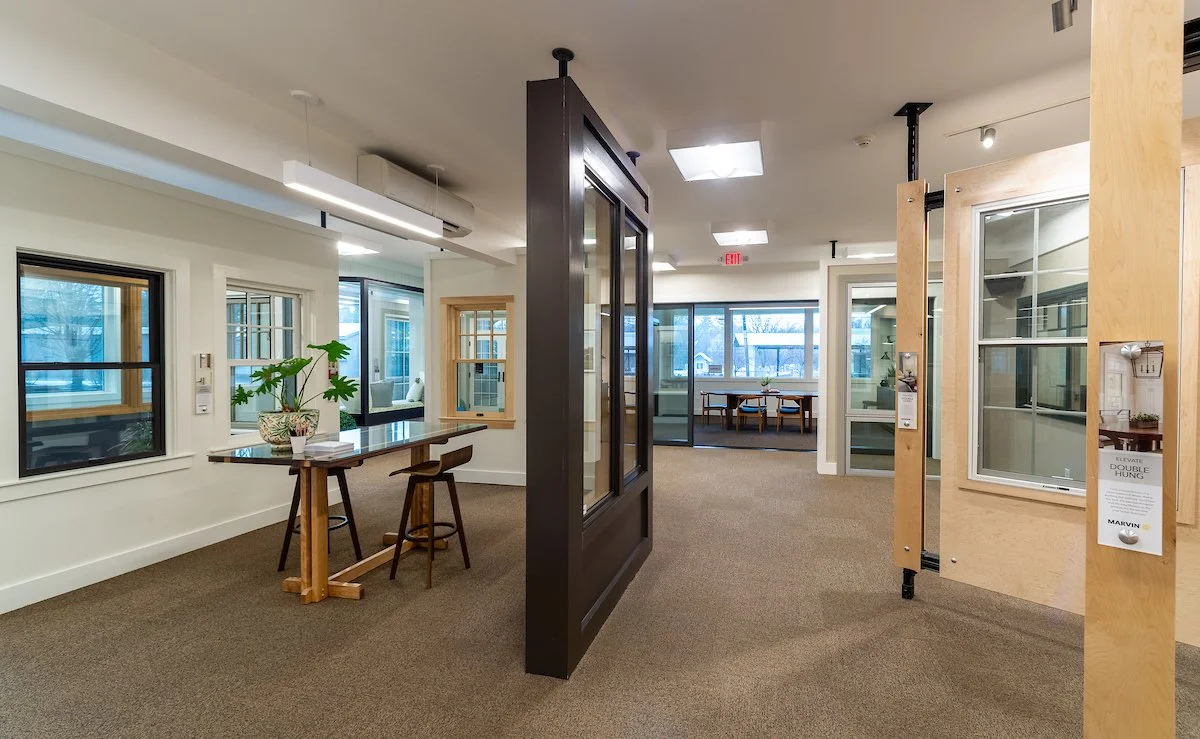
For a lumber yard with a showroom, your space is your most powerful sales tool. It's the physical connection where material meets imagination, and where a contractor's precision meets a homeowner’s dream.
As architects specializing in high-performance residences and commercial spaces, we believe your showroom should be intentionally designed with the same rigor as the projects it supports. An effective design reduces friction in the sales process, elevates the perceived value of your products, and turns browsers into buyers.
Here are the five critical design principles we use to transform lumber and material showrooms into compelling, high-converting retail experiences:
1. Strategy First: Define Your Audience, Define Your Zones
Before sketching a single wall, you must define who is buying and how they make decisions. Your primary challenge is catering to distinct user groups, such as contractors, architects, and homeowners, by using flexible meeting spaces and consultation areas that accommodate various engagement styles.
The Pro-Buyer (Contractors/Architects): They value efficiency, technical data, and rapid material comparison.
The End-User (Homeowners/Developers): They seek inspiration, context, and emotional assurance.
The goal is to create distinct, intentional zones that streamline the sales process for each primary customer profile.
2. The Sales Journey: Storytelling Through Flow
A great showroom is a narrative that guides a visitor from initial curiosity to final certainty. Your floor plan must be a clear, intentional pathway, not a random assembly of displays.
Curiosity to Conviction: Map the visitor's journey from the moment they enter. What is the first product you want them to touch? Use spatial sequencing to gradually reveal your best products. An overwhelming entry will trigger analysis paralysis; a curated path leads to engagement.
Anchor Your Theme: Anchor the entire layout around a central theme, such as Sustainable Construction or High-Performance Exterior Systems. This thematic focus makes the entire experience feel intentional and memorable, cementing your brand's expertise.
Focal Points and Visibility: Use your products to establish clear focal points at the end of long circulation paths. This draws customers further into the space, ensuring they see your full range of offerings and compelling them to explore the entire showroom. And at the end of the day, purchase more products from you.
3. Balance Touch and Tech: Integrating Digital Depth
In the materials industry, the tactile experience is non-negotiable, but your showroom cannot be cluttered with every SKU. The solution is balancing physical samples with digital accessibility.
Curated Physical Samples: Thoughtfully select and display key materials so customers can see, touch, and compare products with ease and make informed decisions.
Virtually Expand Your Showroom: Use strategically placed screens, digital kiosks, or QR codes linked to your online catalog. This allows customers to instantly access visuals, specs, color options, and project galleries for your vast inventory without physically overcrowding the space. This integration turns a static showroom into a dynamic, information-rich environment.
4. Built to Evolve: Flexibility as Return on Investment (ROI)
Your product lines, promotions, and building codes are constantly changing. Designing for obsolescence is poor business. Your space must be future-proofed to adapt without requiring costly, disruptive renovations.
Create Fluff Space: Design adaptable areas with movable furniture that can quickly support mobile displays and new products before finding a permanent spot in the showroom.
Multi-Use Zones: Plan for adaptable spaces that can function as a client meeting room one day, a contractor training area the next, and an evening launch event space for a new product.
5. The Unforgettable Close: Sales Team Utilization
The main factors driving your staff's success in engaging customers are both how they engage and the ease with which they can engage customers with your product.
Successful Staff Engagement: Optimize staff visibility, approachability, and operational flow of the showroom to support meaningful customer interactions.
Staff Desk Placement: Strategically position staff desks to encourage engagement, whether integrated among products, organized by program, or placed to the side to prioritize product and meeting/conference areas.
Ready to redesign your showroom to reflect the quality of your materials and the strength of your brand? Contact us to begin planning your high-performance sales environment.